Elon's Interplanetary Stack - Part 7 of 7 (Series Finale)
Parts 1 through 6 traced the five technology layers Elon needs: chips, robots, training compute, rockets and power. Part 7 asks what the SpaceX IPO changes about that stack. Open the full series hub.
- Part 1: TERAFAB and the silicon layer
- Part 2: Optimus robots and FSD
- Part 3: xAI Colossus and the training layer
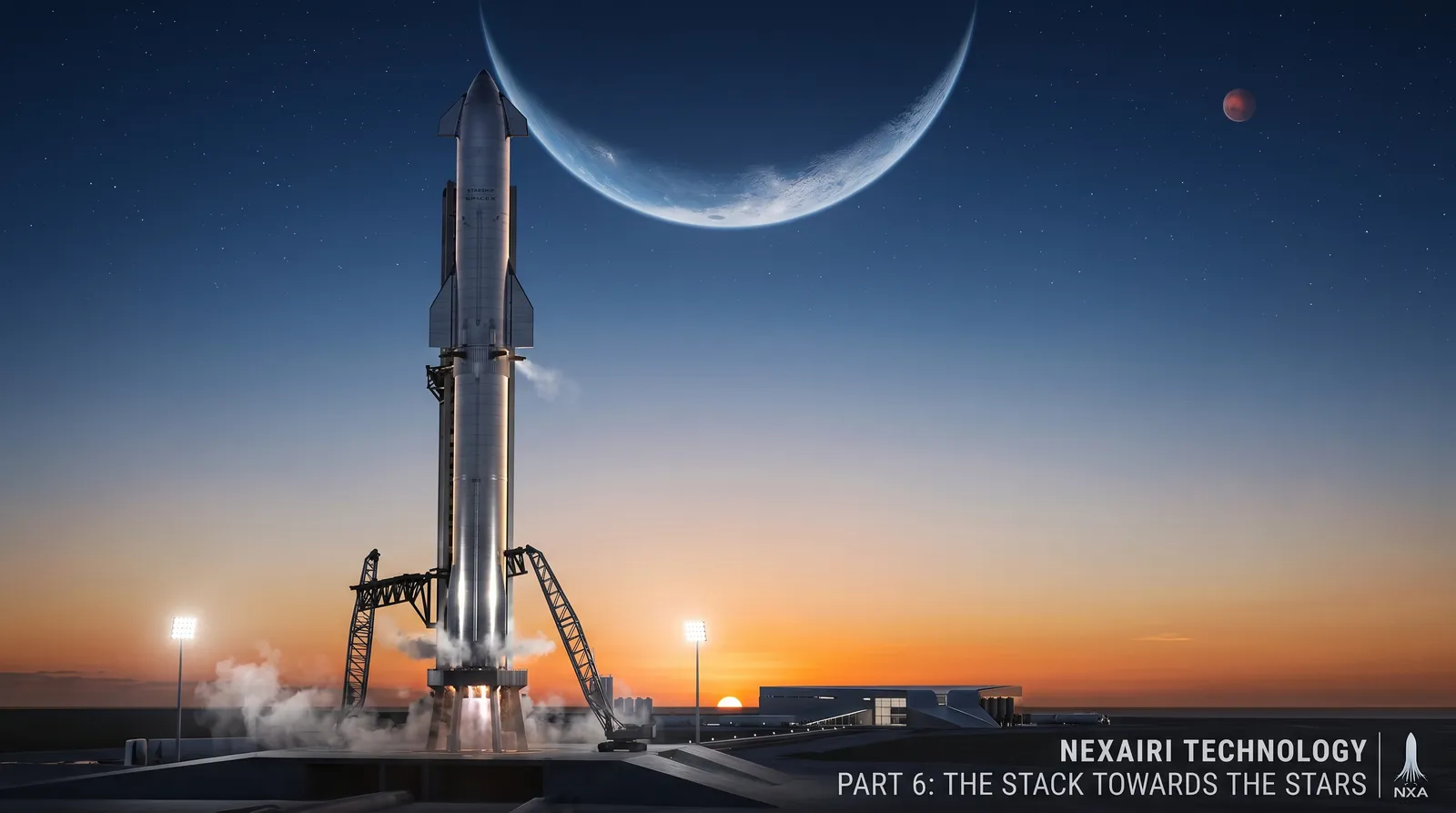
- Part 4: Starship and Mars logistics
- Part 5: Grid power and energy constraints
- Part 6: Mars as an integrated operating system
- Part 7 (You are here): The IPO finale: what going public changes
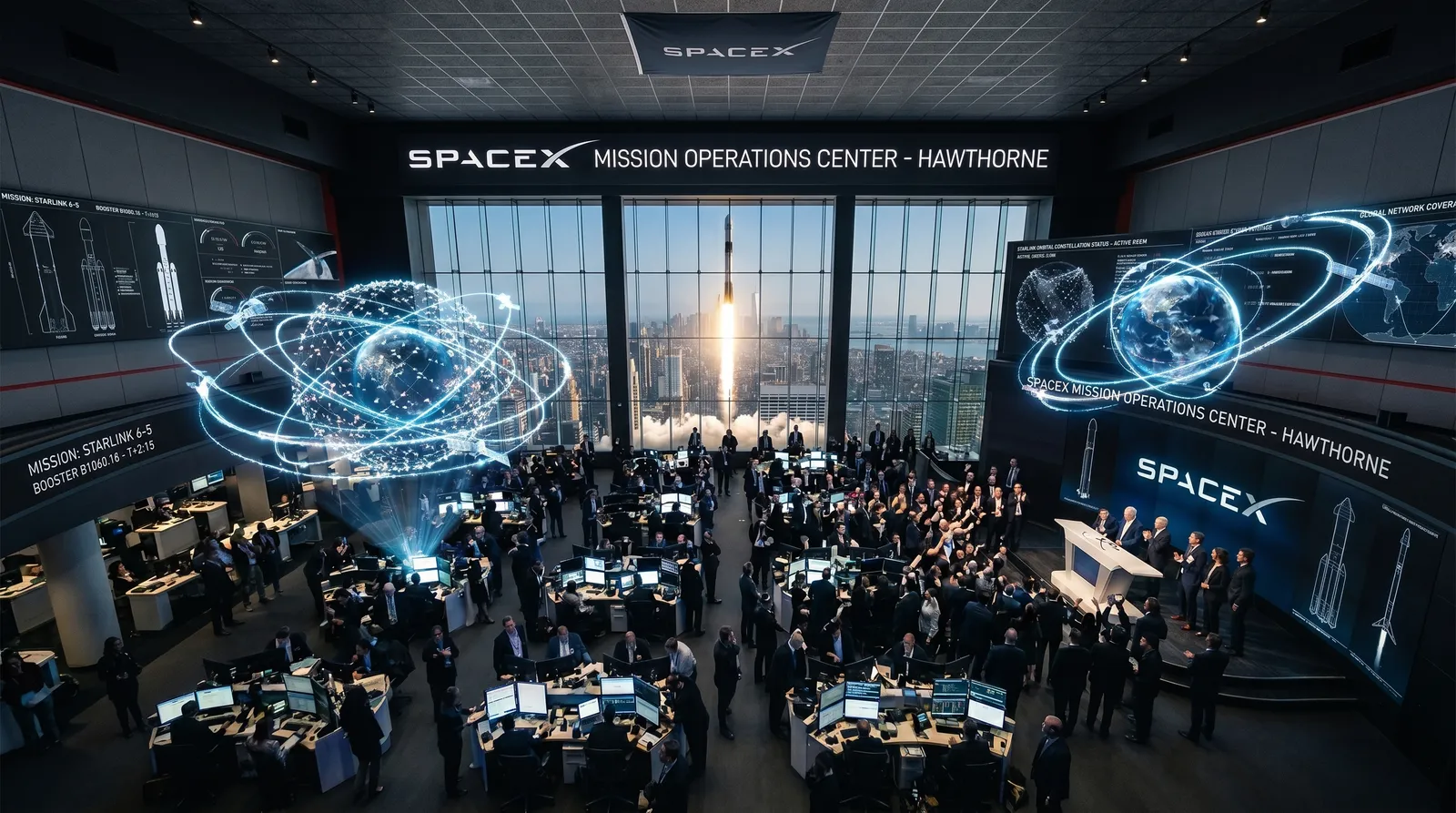
At 9:30 a.m. Eastern, SpaceX went public on Nasdaq. SPCX opened at $150. It ran to $168.75 by midday, 25% above the $135 IPO price. Market cap hit $2.21 trillion at the high. Elon Musk became the world's first trillionaire.
The people buying SPCX today are not funding Mars. They have almost no say in whether it happens.
Six parts of this series traced the five layers Elon is building: chips from TERAFAB, Optimus robots, xAI's training compute, Starship and grid power. The question underneath all of it: who pays? Today's IPO answers that, partly.
What actually happened on Nasdaq today?
SpaceX raised $75 billion today. It sold 555.6 million shares at $135 each. That is the largest IPO ever — more than twice what Saudi Aramco raised in 2019.
The stock's highest point today was $168.75. At that price, SpaceX was worth $2.21 trillion. Amazon, for comparison, is worth about $2.54 trillion. SpaceX is now worth more than Tesla, which sits at around $1.6 trillion.
Here is the thing most headlines will miss. SpaceX has two types of shares. Musk's shares carry 10 votes each. The shares you can buy carry one vote each. That gap means Musk controls 82.4% of all votes while owning just 42% of the stock. SpaceX confirmed this in its prospectus filed with the SEC on June 3. It is a public company. But it is still Musk's company.
Musk offered up to 30% of the IPO shares to everyday investors. Most IPOs set aside just 5 to 10% for them. That is three times the usual amount and fairly rare for a company this size.
Why Starlink is the real valuation story
The $1.77 trillion valuation is not built on rockets. It is built on Starlink, SpaceX's satellite internet service. No company in this space has matched its revenue.
In 2025, Starlink brought in $10.6 billion. That is 67% of SpaceX's total $18.67 billion. Profit (EBITDA, or earnings before interest, taxes, depreciation and amortization) was $6.6 billion, per the S-1. In just the first three months of 2026, Starlink added $3.26 billion in revenue and $1.19 billion in operating income. Today it has more than 9,800 satellites in orbit and over 10 million customers in 100 countries.
Here is the flywheel. Every Starship launch gets cheaper. Cheaper launches let SpaceX grow Starlink faster. More satellites mean more subscribers. More subscribers fund more Starship flights. Starship was built for Mars. But right now it is also the machine that keeps Starlink growing.
| Metric | Figure | Source |
|---|---|---|
| SpaceX 2025 total revenue | ~$18.67B | S-1 filing |
| Starlink 2025 revenue | ~$10.6B (67% of total) | S-1 filing |
| Starlink 2025 adjusted EBITDA | ~$6.6B | S-1 filing |
| Starlink Q1 2026 revenue | $3.26B ($1.19B operating income) | S-1 filing |
| Starlink subscribers | 10M+ across 100 countries | S-1 filing |
| SPCX IPO raise | $75B at $135/share | CNBC June 12, 2026 |
| SPCX intraday high | $168.75 (+25%); ~$2.21T market cap | CNBC June 12, 2026 |
What does the xAI acquisition add to SPCX shareholders?
SpaceX bought xAI in February 2026. That deal brought in Grok, xAI's AI assistant, and the Colossus computing cluster in Memphis. The plan: build data centers in space by 2028.
xAI was spending about $1 billion a month competing with OpenAI, Google and Anthropic. The SpaceX prospectus shows what that looked like in Q1 2026: $818 million in revenue, $2.47 billion in losses and $7.72 billion in capital spending. Joining SpaceX gave xAI access to Starlink's cash to cover those costs.
SpaceX wants to launch satellites that work as AI data centers. The first batch is targeted for 2028. The company is asking the FCC, which regulates communications in the US, for permission to launch up to one million of them. The reason for putting data centers in space: buildings have limits. A data center needs power, cooling, land and permits. A satellite in orbit does not.
Part 3 covered xAI's Colossus cluster: 555,000 GPUs in Memphis, the biggest AI training facility outside Google. Now that xAI is inside SpaceX, the company running those servers also has the rocket that could eventually launch them.
What the IPO changes vs. what it doesn't
Going public gives SpaceX money and forces it to open its books. It does not give shareholders any say in Mars.
Six parts of this series traced what the stack needs. Chips that survive -60°C cold. Robots that work without asking a human. AI smart enough to solve problems 15 minutes from Earth. A rocket that lands 100 tons on another planet. Power that holds through a dust storm. All five are moving. But the question was always: who pays for it at this scale?
Today takes care of that. A company that just raised $75 billion can push TERAFAB production forward, fund Starship V4 and build out xAI orbital compute without another private fundraise.
Here is what going public adds that being private never required: disclosure. A private SpaceX could announce progress without showing numbers. A public SpaceX files quarterly reports, called 10-Ks. Those filings will either prove the stack is on track or show exactly where it is falling behind.
What it does not add: any way for shareholders to change the Mars plan. Musk controls 82.4% of the votes. The SPCX board can disagree. It would not matter.
How does the SpaceX IPO change the Mars timeline?
The IPO does not move the Mars date. It changes who funds the road to get there.
Lunar missions still come first. Part 6 covered why. The moon is where the full stack gets tested before SpaceX commits to a 26-month Mars trip with no way back. Musk said in February 2026 that lunar missions would come 5 to 7 years before Mars.
A 2033 uncrewed Mars mission is still a goal, not a locked plan. What changed today: SpaceX can now pay to get there faster. Starlink's revenue already covers daily costs. The $75 billion from today's IPO buys speed across every layer.
The question worth watching: will SPCX's quarterly reports force honest disclosure about where the five layers actually stand? Starship progress, Optimus sales, TERAFAB chip yields and xAI orbital approvals will now appear in SEC filings every three months. That level of scrutiny is brand new for SpaceX.
What should you actually watch instead of the stock price?
Four signals tell you more than the SPCX price chart about whether this stack is becoming real. Watch these — not the stock.
Starlink's subscriber count matters most. The whole valuation assumes growth. At 10 million customers today, the institutional case requires SpaceX to keep adding subscribers, especially in countries where internet cables never reached. If that number flattens, the money case starts to crack.
Watch the xAI orbital compute schedule. SpaceX says the first satellite data centers launch in 2028. If that slips to 2030, the space-based AI part of the story needs a rethink. Check the 10-K annual filings for real engineering milestones. If the language stays at "as early as 2028" with no specifics, that is a signal too.
Watch for the first outside Optimus contract. Tesla uses Optimus robots inside its own factories. That is internal testing. A paying customer outside Tesla is the proof that the robot layer is a product, not still a research project. That contract has not happened yet.
Watch TERAFAB chip cost-per-unit. Optimus only reaches millions of units if the chip inside it gets cheap enough to make the robot affordable. Any Tesla earnings report disclosing chip yields or cost trajectories tells you more than analyst price targets on SPCX.
The SPCX chart will be everywhere for weeks. It is just price. The signal is in those four numbers.
Mars is still Musk's call. The public just bought a seat at the table. They don't get to pick the destination.
Sources
- CNBC: SpaceX IPO live updates — SPCX pops more than 25% on Nasdaq debut (June 12, 2026)
- CNBC: SpaceX targets $135 IPO price at valuation of $1.77 trillion (June 3, 2026)
- CNBC: SpaceX's historic IPO plans — billions in losses and Musk's massive ownership (May 20, 2026)
- TechCrunch: SpaceX officially acquires xAI, plans data centers in space (February 2026)
- Yahoo Finance: Why Starlink is so important to SpaceX's IPO
- CBS News: Elon Musk becomes the world's first trillionaire with SpaceX's IPO
- MEXC: Who really owns SpaceX — how Musk controls 82.4% of votes with 42% of equity
- Scientific American: SpaceX IPO valuation depends on Starship and orbital AI data centers
- Constellation Research: SpaceX IPO at $135 — do you believe in space data centers and xAI's potential?
Related Articles in the Series
Jim Smart is the founder and editor in chief of Nexairi. A Business Intelligence Developer with experience building data systems for Verizon, U.S. Army operations, and enterprise finance teams, Jim spent years turning complex data into decisions that executives could act on — dashboards, forecasting models, and automation pipelines across telecom and government contracting. He founded Nexairi to apply that same clarity to AI: making emerging technology understandable and actionable for the operators, accountants, and business owners who need it most. Jim holds GenAI certifications from the University of South Florida Bellini College of AI and completed Springboard's Data Science Career Track.